
How to Descale a Coffee Maker (Drip, Espresso and Pod)
Why scale builds up, how often to descale and what to check in your manual.
Quick answer
Major manufacturers recommend descaling at least every 3 to 6 months, according to the National Coffee Association. Some machines work with a white vinegar and water solution, but check your machine's instructions first, then run several brew cycles of plain water to rinse. Espresso and pod machines often prompt you, so follow their steps.
Jump to section
Why scale builds up
Water carries dissolved minerals. When you heat hard water, those minerals come out as a hard, chalky deposit. The US Geological Survey (USGS) says heating hard water forms calcium carbonate scale (USGS).
In a coffee maker, scale collects wherever water gets hot: the heating element, the tubing and the boiler. USGS says scale can shorten equipment life, raise heating costs and lower the efficiency of electric water heaters (USGS). A coffee maker is a small water heater, so the same logic applies.
Scale is not dirt, so washing the carafe does not remove it. It needs a descaling step.
Scale is a hard-water problem, so how much you need to worry depends on where you live. The next section shows how to find out where your water falls, and the schedule after it tells you how often to act.
How hard is your water?
USGS measures hardness in milligrams per liter (mg/L) as calcium carbonate. Its categories are:
| Water | Hardness (mg/L as calcium carbonate) |
|---|---|
| Soft | 0-60 |
| Moderately hard | 61-120 |
| Hard | 121-180 |
| Very hard | Over 180 |
Source: USGS, Hardness of water.
Find your own number from your local water supplier's report, or ask them. If your water is hard or very hard, scale builds faster, so you may want to descale toward the short end of the schedule below. We do not have a source that ties a hardness level to a descaling interval, so we do not give a precise one.
How often to descale
NCA says major manufacturers recommend descaling at least every 3 to 6 months (NCA drip guide). That is the general rule for coffee makers, and it is a good default if your manual does not say.
Your machine's own schedule comes first. Some machines tell you when to descale. For example, Breville's Barista Touch Impress page says the machine shows on screen when to descale, and you follow the on-machine steps (Breville). That page is for one model, so check your own manual rather than assuming the same steps apply.
Write the date of each descale on a piece of tape on the machine, or set a reminder on your phone for the 3 to 6 month window. Our sources give no schedule beyond that window, so go by your manual and your machine's signals.
If you use a kettle for pour-over, scale builds there as well. Our gooseneck kettle guide lists upkeep features such as auto shut-off.
Vinegar or descaler: check your manual
Two products are in common use. NCA says some machines work with a white vinegar and water solution, but you should check your machine's instructions first (NCA drip guide). It also notes that some manufacturers sell their own descaling solutions (NCA).
Why the manual first? Machines differ in what their parts tolerate, and a method that suits one drip brewer may not suit another. Your manual is also where to look for which solutions the maker allows. If you cannot find the manual, search for it on the maker's site using the model number.
Step by step for drip machines
These steps follow NCA's general guidance. Where your manual says something different, follow the manual. Before you start, gather the manual, the descaling solution or white vinegar if the manual allows it, a clean carafe and a few minutes. Run the process when you do not need coffee, because the full cycle plus rinses takes a while.
- Read the instructions. Check whether your machine works with white vinegar and water, or needs the maker's descaler.
- Empty the machine. Remove the filter, the grounds and any used paper.
- Fill the reservoir with the solution, in the amount your manual states.
- Run a brew cycle. Let the machine brew the solution through into the carafe, as your manual directs. If it has a descale mode, use that.
- Discard the solution and rinse the carafe.
- Rinse the machine with plain water; see the next section.
If you are shopping for a replacement, our drip coffee maker guide compares carafe type, capacity and cleaning.
Espresso and pod machines: follow the prompts
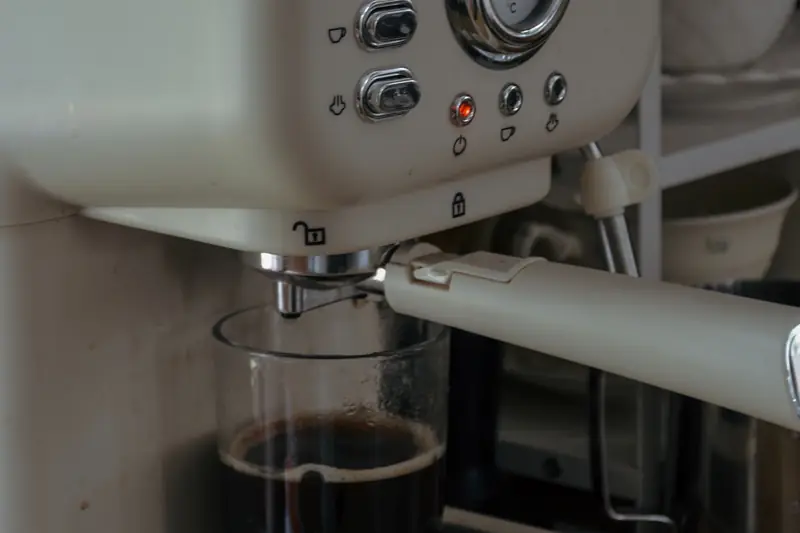
Espresso and pod machines are less forgiving, and they often have a descale program or alert. Use it. The on-machine steps are written for that model, and they handle the order of cycles for you.
For espresso machines in particular, see our beginner espresso machine guide, where a descale alert is one of the spec columns. For the basics of the machine itself, read how to make espresso at home.
We have not checked model-specific steps for pod machines, so we do not publish amounts or cycle counts for them. Use the manual that came with your machine, or the maker's support page.
Rinse cycles
After descaling, rinse. NCA says to run several brew cycles of plain water afterward to remove the vinegar taste (NCA drip guide). The same idea applies to any descaler: the manual will say how many rinses are needed.
Taste the first cup you brew afterward. If it still tastes of vinegar or of the cleaner, run another rinse cycle. Discard the rinse water each time, and do not drink it.
Then brew a normal pot and taste it. If the coffee tastes clean, you are done, and you can note the date so you know when the next descale is due.
Daily cleaning habits
Descaling is occasional. Daily habits keep the rest of the machine clean. NCA says to rinse the basket and any permanent filter after each use, wash the carafe, and watch for coffee-oil buildup, which can make coffee taste bitter (NCA drip guide).
A short daily routine:
- Throw out used grounds and paper filters.
- Rinse the basket and permanent filter.
- Wash the carafe and lid.
- Leave the reservoir lid open so it can dry.
Do these steps even on busy mornings. They take a minute, and they keep old coffee oils from building up, which NCA warns can make coffee taste bitter. A clean basket also drains faster, and a clean carafe does not carry old flavors into the next pot.
Pair that routine with filtered water if you can. NCA advises using cold, filtered water and avoiding distilled or softened water (NCA). For ratios and times, see our coffee-to-water ratio guide.
Gear that helps
-

Best Drip Coffee Makers
Compare drip machines, including carafe type and upkeep, before you replace one that is clogged with scale.
-

Best Espresso Machines for Beginners
Look for descale alerts, which tell you when to act.
-
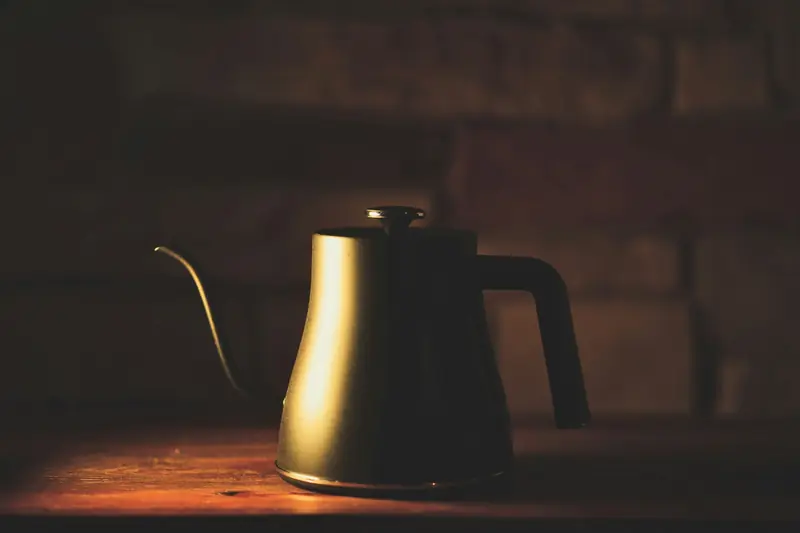
Best Gooseneck Kettles for Pour-Over
Kettles scale up too, so check the care notes on any model you buy.
FAQ
How often should I descale a coffee maker?
NCA says major manufacturers recommend at least every 3 to 6 months (NCA).
Can I use vinegar?
Some machines work with a white vinegar and water solution, but check your machine's instructions first (NCA).
What is hard water?
USGS lists hard water as 121 to 180 mg/L and very hard water as over 180 mg/L, measured as calcium carbonate (USGS).
Related
-
Buying guide
Best Drip Coffee Makers
Brew temperature, carafe, capacity and SCA certification, compared.
-
Buying guide
Best Espresso Machines for Beginners
Machine type, grinder, milk system and descale alerts, side by side.
-
Buying guide
Best Gooseneck Kettles for Pour-Over
Temperature control, spout flow, capacity and materials, side by side.
-
Buying guide
Best Espresso Machines Under $500
Temperature control, steam, baskets and warranty for budget machines.
-

Guide
Coffee to Water Ratio: A Simple Chart for Every Brew Method
Ratio, grind, time and temperature for five brew methods, in one chart.
-

Guide
How to Make Espresso at Home with a Machine
The numbers, the steps and the cleanup for your first espresso shots.
Get the Brew Ratio Cheat Sheet
A printable one-page sheet with the ratio, grind, time and temperature for drip, pour-over, French press, cold brew and espresso. Free, and sized for the cabinet door.