
Coffee to Water Ratio: A Simple Chart for Every Brew Method
Ratio, grind, time and temperature for five brew methods, in one chart.
Quick answer
Start with the National Coffee Association's Golden Ratio: 1 to 2 tablespoons of ground coffee for every 6 oz of water (NCA). If you weigh your coffee, the Specialty Coffee Association's standard brew ratio is 55 g of coffee per 1 kg of water (SCA). The chart below gives the ratio for each brew method.
Jump to section
The Golden Ratio in tablespoons
The simplest ratio needs no scale. The National Coffee Association (NCA) calls it the Golden Ratio: 1 to 2 tablespoons of ground coffee for every 6 oz of water (NCA drip guide). Use 1 tablespoon if you like a lighter cup and 2 if you like it stronger.
Tablespoons are a rough measure. Beans differ in size and density, and a heaped spoon holds more than a level one. That is fine for a quick pot of drip coffee. It is less useful when you want to repeat a cup you liked, which is where weighing comes in.
Note that a "cup" on a coffee maker is not always 6 oz. Makers define their own cup size, so check the capacity in the manual before you scale the Golden Ratio up for a full pot. Our drip coffee maker guide has a capacity column for that reason.
Ratios by weight (SCA 55 g/kg)
Weighing gives you the same coffee every time. The Specialty Coffee Association (SCA) sets its standard brew ratio at 55 g of coffee per 1 kg of water, written 55 g/kg (SCA Standard 310). The same standard asks certified brewers to hit a brew strength of 1.15 to 1.55% TDS, a figure measured with a refractometer, at that ratio. You do not need a refractometer to use the ratio. It is simply a well-defined place to start.
Many guides write ratios as 1:x, meaning 1 gram of coffee to x grams of water. NCA uses that form for pour-over, French press and cold brew. Measuring the water on the same scale as the coffee keeps the whole recipe in one unit.
Chart by method: drip, pour-over, French press, cold brew and espresso
Every number in this chart comes from the NCA brewing guides, the SCA standard or the traditional Italian espresso specification, and each is linked below the table.
| Method | Ratio | Grind | Contact time |
|---|---|---|---|
| Drip | 1-2 tablespoons per 6 oz of water | Medium | About 5 minutes |
| Pour-over | 1:13 to 1:16 | Medium | 2-4 minutes |
| French press | 1:10 to 1:16 | Coarse | About 4 minutes |
| Cold brew | 1:4 to 1:5 | Coarse | About 12 hours |
| Espresso | 1:2 (coffee to brewed espresso) | Fine | 20-30 seconds |
Sources: NCA guides for drip, pour-over, French press, cold brew and espresso.
Two points are easy to miss. Cold brew is a concentrate-style ratio, much stronger than hot methods, and is meant to be diluted. Espresso is different again: NCA gives 1 g of dry coffee to 2 g of brewed espresso in the cup, so the second number is the espresso you collect, not the water you push through. Our guides on making cold brew and making espresso at home cover each in full.
Water temperature
Hot methods need hot water, but not boiling. For pour-over and French press, NCA gives 93 ± 3°C, citing the SCA standard (NCA pour-over guide). That works out to about 194 to 205°F, and it is our own arithmetic from the NCA figure.
For automatic drip, SCA-certified brewers must bring the slurry to 90 to 96°C and hold it there for the rest of the brew cycle (SCA Standard 310). If your machine is not certified, the manual may say less about its temperature.
Water boils at 100°C at sea level, so a kettle straight off the boil is above the pour-over range. Let it rest briefly, or use a kettle with a temperature setting. Our guide to gooseneck kettles lists models by temperature range and hold time.
For cold brew, NCA calls for room-temperature or cooler water (NCA cold brew guide).
Water quality
Coffee is mostly water, so the water matters. NCA advises using cold water, filtered if possible, and avoiding distilled or softened water (NCA drip guide). It does not give a mineral target, so we do not either.
Water also affects your equipment. Heating hard water forms calcium carbonate scale (USGS), which is why coffee makers and kettles need descaling. Our descaling guide explains how to check your water hardness and how often to descale.
Adjusting to taste
Treat the ratio as a starting line. Change one thing at a time, and write down what you did.
NCA's taste rules point to the grind: if your coffee tastes bitter or sour, it may be ground too fine (over-extracted), so try a larger, coarser grind. If it tastes flat or watery, it may be ground too coarse (under-extracted), so try a smaller, finer grind (NCA drip guide). Our grind size chart shows the starting grind for each method.
If the grind is right and the cup is still too weak or too strong, change the amount of coffee a little, then brew again. Moving the ratio and the grind together makes it hard to tell which change helped.
Tools that help (scale, kettle, grinder)
Three tools make ratios easy to repeat.
- A scale. It turns a ratio into numbers you can follow. Pour-over and espresso benefit most.
- A kettle. A model with temperature control gets the water into the range the standards describe without a separate thermometer.
- A burr grinder. An even grind means the ratio extracts the same way each day. Compare options in our burr grinder guide.
Here is a simple routine for a pour-over:
- Weigh the coffee and note the ratio you want, such as 1:15 (within NCA's 1:13 to 1:16 range).
- Grind to a medium size and put the coffee in a wet filter.
- Start the timer, and add twice the coffee's weight in water for the bloom, using water in the 93 ± 3°C range. NCA gives the bloom as 30 to 45 seconds (NCA pour-over guide).
- Pour the rest in slow circles, finishing within 2 to 4 minutes in total (NCA pour-over guide).
- Taste, then change only the grind or the amount of coffee next time.
If you want to compare setups before you buy, our pour-over maker guide and pour-over vs drip coffee comparison show the trade-offs.
Gear that helps
-
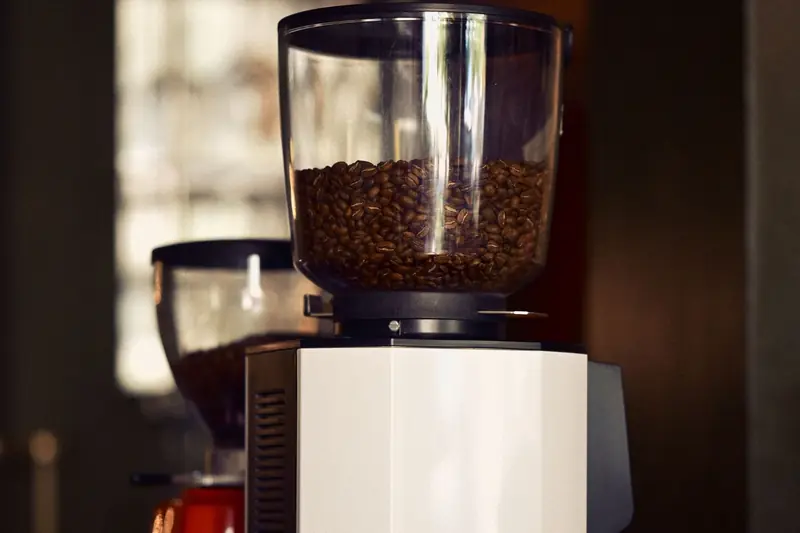
Best Burr Coffee Grinders for Home
A burr grinder gives an even grind, so the ratio you choose extracts the same way each day.
-
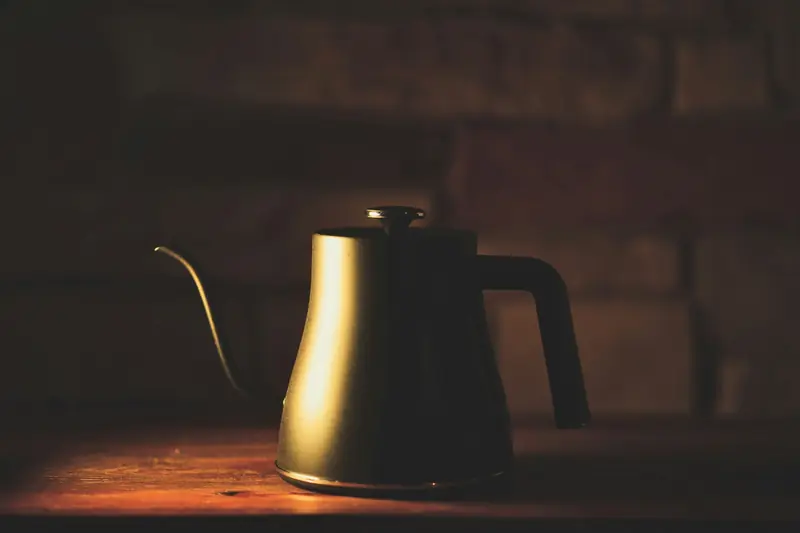
Best Gooseneck Kettles for Pour-Over
A kettle with temperature control brings the water to the range the standards describe.
-
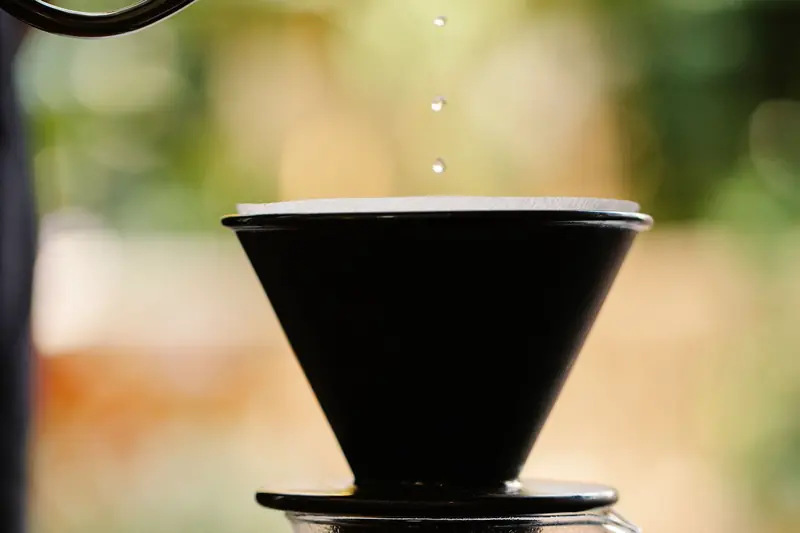
Best Pour-Over Coffee Makers and Drippers
Pour-over rewards a ratio by weight, and a dripper makes the pour easy to repeat.
FAQ
What is the Golden Ratio for coffee?
1 to 2 tablespoons of ground coffee for every 6 oz of water (NCA).
What ratio does the SCA use?
The SCA standard brew ratio is 55 g of coffee per 1 kg of water (SCA).
Should I use distilled water?
No. NCA advises using cold, filtered water if possible, and avoiding distilled or softened water (NCA).
Related
-
Buying guide
Best Drip Coffee Makers
Brew temperature, carafe, capacity and SCA certification, compared.
-
Buying guide
Best Pour-Over Coffee Makers and Drippers
Dripper shape, material, filters and capacity, side by side.
-
Buying guide
Best Burr Coffee Grinders for Home
Burr type, grind range, adjustment and retention, side by side.
-
Buying guide
Best Gooseneck Kettles for Pour-Over
Temperature control, spout flow, capacity and materials, side by side.
-
Guide
Coffee Grind Size Chart: From Espresso to Cold Brew
Which grind each brew method wants, with contact times and taste fixes.
-

Guide
How to Make Cold Brew Coffee at Home
Ratio, grind, steep time and safe storage for cold brew concentrate.
Get the Brew Ratio Cheat Sheet
A printable one-page sheet with the ratio, grind, time and temperature for drip, pour-over, French press, cold brew and espresso. Free, and sized for the cabinet door.